Working a Season in France: The Real Truth About Hospitality Life Between Saint-Tropez and Courchevel
Our Story
OUR STORY
5/12/20268 min read
There's a question we get asked constantly, in every comment section, every DM, every time we post a photo from somewhere beautiful:
"But how do you actually afford it?"
And the honest answer isn't what people expect. We didn't win the lottery. We don't have rich parents. We didn't build a six-figure Instagram account. We worked seasons. In kitchens and dining rooms and event spaces in two of the most expensive destinations in France — and that's exactly how we funded everything else.
This is the real story of what it means to work a hospitality season. The parts that look glamorous from the outside, and the parts nobody talks about.
How It Works — The Basics
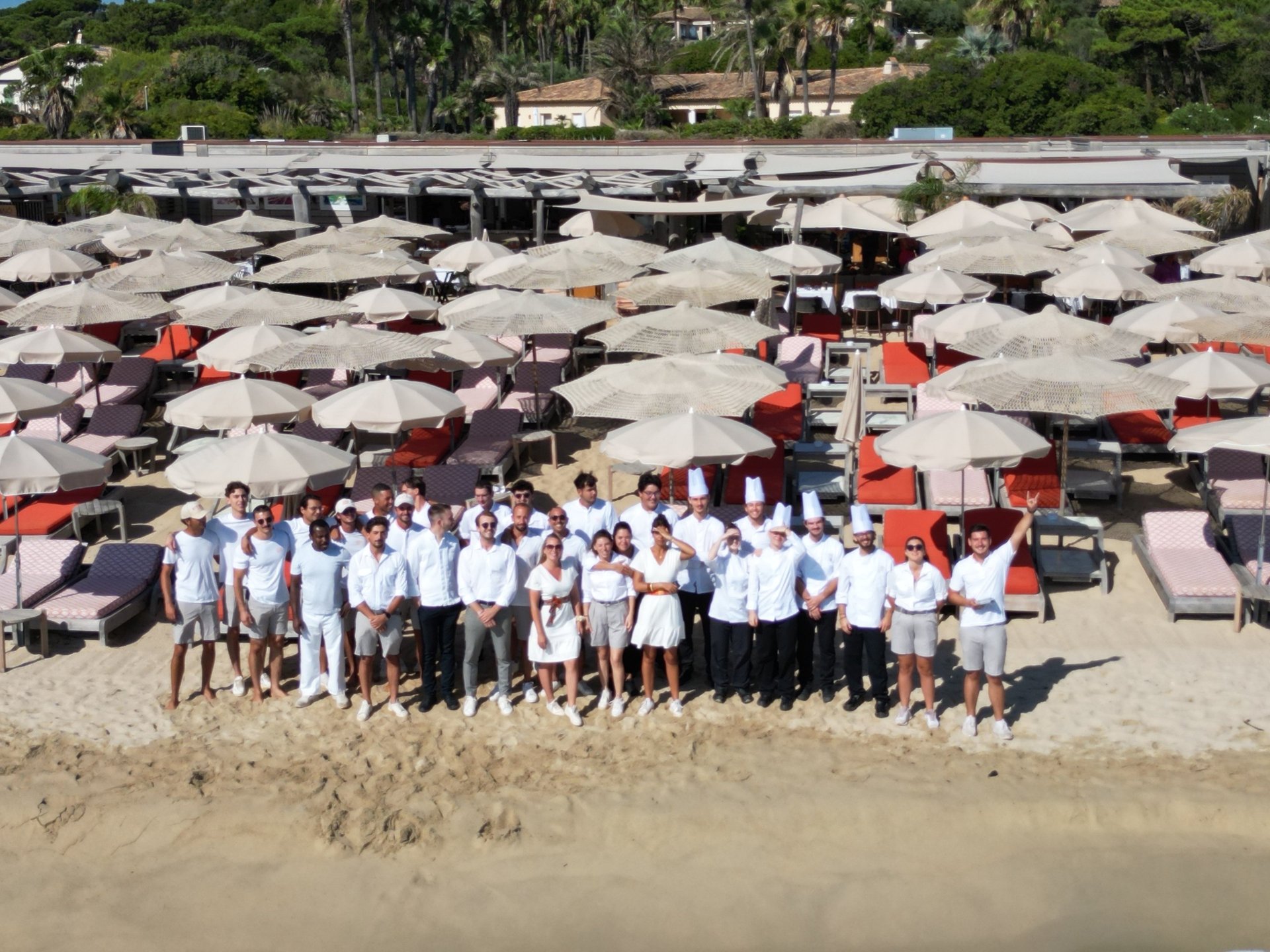
The seasonal hospitality system in France runs on two main cycles. Summer sends workers to the Côte d'Azur — Saint-Tropez, Cannes, Antibes, the whole stretch of coast where the Mediterranean turns turquoise and the yachts get bigger than some apartments we've lived in. Winter sends them to the Alps — Courchevel, Méribel, Val d'Isère, Val Thorens — where the clientele changes but the price tags stay just as surreal.
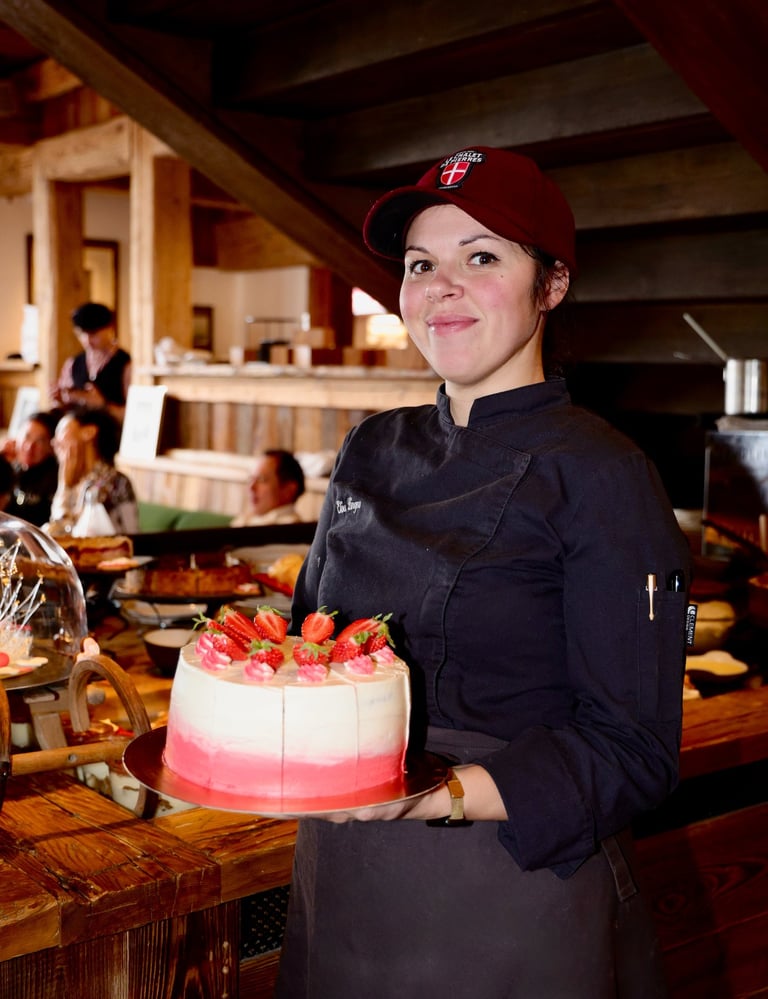
We did both. Elisa worked a summer season in Saint-Tropez, then a winter season in Courchevel. Between those two experiences, she saved enough to take months off, keep moving, and eventually build something different. That's when she met Tom — also working the season in Saint-Tropez. Two people, one port town, one industry. That's our story in one sentence.
The Practical Side: What You Need to Know
If you're considering a season in France, a few things worth knowing:
Finding work: Most hiring for summer seasons on the Riviera happens between February and April. For winter Alpine seasons, September through November. Platforms like Saison.com and Saisonnier.com are the main job boards. Showing up in person with a CV still works in smaller establishments.
Contracts: Seasonal workers in France are typically on a contrat à durée déterminée saisonnier (fixed-term seasonal contract). This comes with French employment protections — paid leave, sick days, social security contributions.
Housing: Always confirm staff accommodation before accepting a position. The quality varies enormously. Ask directly: is it included, what does it cost if not, how far is it from the workplace, how many people share a room.
Having a car: This makes a bigger difference than people expect. Many saisonniers depend entirely on public transport or employer shuttles, which limits where they can go on days off and how much they can move between placements. Having your own car gives you real autonomy — weekend drives into the Var hinterland or the villages above Courchevel, grocery runs on your own schedule, and the freedom to leave the moment the season ends without waiting for a connection. It also makes the transition between seasons (Alps to Riviera or vice versa) much smoother. If you can bring a car, do it.
Language: In Saint-Tropez especially, French is essential for anything beyond the most tourist-facing roles. In the Alps, many luxury establishments have more international staff, but French will still help you significantly.
After the season: If you've worked a full season and want to continue traveling, look into pole emploi (France Travail) allocation rights. Seasonal workers who've contributed to French social security may be entitled to unemployment benefits between seasons — this is a legitimate part of how many saisonniers structure their year.
We're now in our second chapter — building Eli & Tom Studio from the road, somewhere between La Réunion and wherever comes next. But the seasons are where it all started. If you have questions about working hospitality in France, drop them in the comments — we'll answer what we can from experience.
Read next: → Saint-Tropez: Where It Started
So — Is It Worth It?
Yes. With clear eyes.
If you go into a season knowing it will be physically hard, socially disorienting, and at times emotionally strange — and you go in with a specific goal (a departure date, a savings target, a next chapter you're funding) — then a season in French hospitality is one of the most effective tools available to someone who wants to travel seriously.
We didn't go back to seasons because we ran out of ideas. We went back because the model worked. Work intensely for a defined period. Live where you work. Save almost everything. Then leave.
The season isn't the destination. It's the mechanism. And if you understand that — if you treat it as a tool rather than a trap — it can give you a freedom that no conventional career path offered us.
Saint-Tropez gave us savings, experience, fluency in a new way of living, and — unexpectedly, improbably — each other. Courchevel gave us the mountains, the money for the next chapter, and proof that the model could be repeated in a completely different environment.
We don't regret a single shift.
The Downside: The Parts That Don't Make It Into the Photos
We'd be lying if we made this sound easy. It isn't. And if you're thinking about doing a season because it seems like a romantic way to fund travel, you should read this part carefully.
The Physical Reality
Hospitality work in a high-season environment is demanding in ways that are hard to explain until you've lived them. You're on your feet for eight, ten, sometimes twelve hours. Split shifts mean you start at 10am, break at 3pm, return at 7pm and finish at midnight — and that's a normal day, not a rough one. In peak season (July-August on the Riviera, Christmas week and February school holidays in the Alps), the pace doesn't let up.
By the end of a summer in Saint-Tropez, your feet hurt in a way that feels structural. Your body has adapted to a rhythm that the rest of the world isn't on. You're awake and moving when others are sleeping, and sleeping when others are having the experiences you're theoretically there to be near.
The Invisible Wall
There's something specific about working in places where the wealth is as concentrated as it is in Saint-Tropez or Courchevel. You're in the room. You're serving the experience. But you're not part of it — and sometimes the line between the two sides of the table feels very stark.
You watch guests arrive by private boat or helicopter. You serve wines that cost more than your weekly salary. You smile through interactions with people who don't always remember that you're a person too. Most of the time it's fine. Sometimes it's demoralizing. This is the honest truth that seasonal workers don't always say out loud because it sounds ungrateful, but it's real.
The Côte d'Azur in summer is one of the most beautiful places in the world. You can be surrounded by that beauty for months and still feel like you're watching it through glass.
The Social Disappearing Act
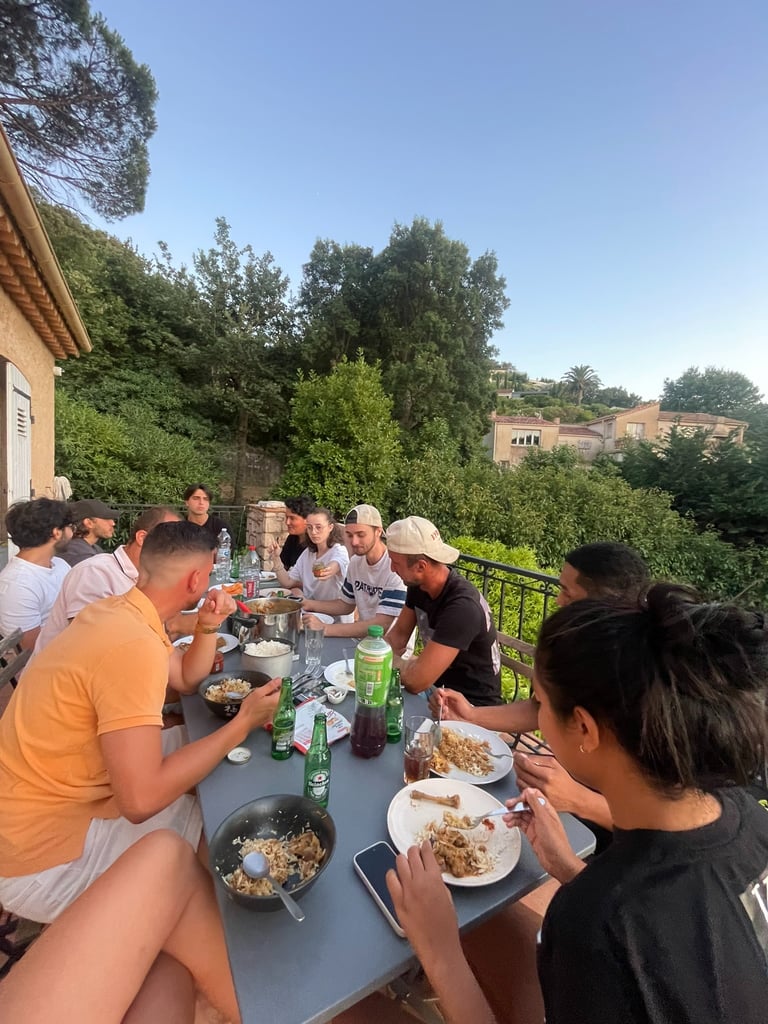
One of the strangest things about seasonal life is the way it constructs communities and then dissolves them. You spend four months working intensely alongside the same people — shared meals, shared exhaustion, shared in-jokes. And then the season ends, and everyone scatters. Some people go home. Some go to the next season. Some disappear entirely.
It's a particular kind of loneliness, the end of a season. You don't have a home base to return to. You don't have the continuity that a permanent job or a fixed city provides. You have a good experience and a depleted address book, and you start again.
Over time, you build a network of people who live the same way. But in the beginning, the transience is something you have to consciously choose, not just stumble into.
You Miss the Season You're In
Here's the darkest irony of seasonal work: you often miss the season you're working.
Summer in Saint-Tropez means beach days for the guests and service shifts for you. The pétanque courts, the beach clubs, the golden afternoon light on the port — you catch glimpses of all of it between shifts. It's not nothing. But it's not the same as being there as a free person.
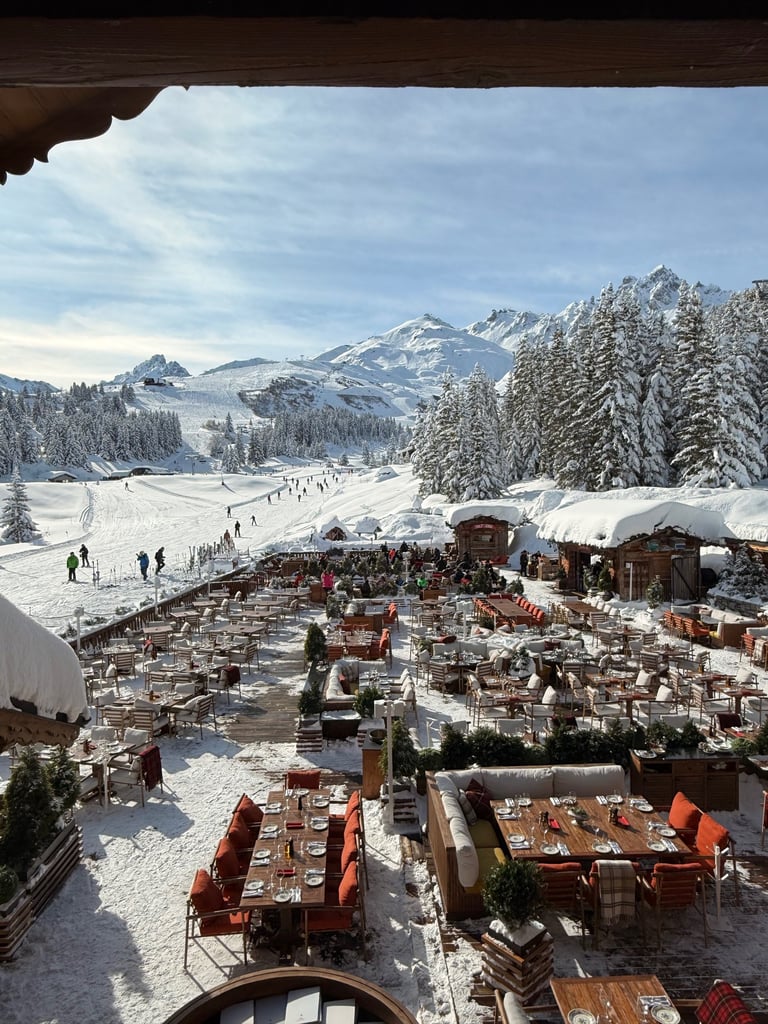
Winter in Courchevel means ski slopes you may never have time to use, mountain air you breathe mostly during the walk between your accommodation and the restaurant. The Alps in January are extraordinary. You see them every day. You don't always get to be in them.
The Upside: What Nobody Tells You About Living Inside These Places
You See the Place from the Inside
There's a version of Saint-Tropez that tourists experience, and a version that workers experience, and they barely overlap.
The tourist version is champagne on terraces, boutiques with no price tags, dinner reservations made three weeks in advance. The worker version is arriving by car before the town wakes up, the old port at 6am when it's still quiet, the locals-only cafés that don't appear on any "hidden gems" blog post, the rhythm of a place that exists independently of who's visiting it.
Working a season means you don't just pass through. You live there — temporarily, yes, but with a depth of experience that a two-week vacation can't replicate. You know which boulangerie the staff goes to. You know which evening to avoid the port. You know the faces, the shortcuts, the parts of the town that don't perform for anyone.
Courchevel in winter offers something similar. The resort is built around one of the most exclusive ski markets in the world. The slopes, the light, the mountain silence in early morning before the lifts open — that's not something you can book. But if you work there, you live inside it for a whole season. You absorb it. It becomes part of you, even if only temporarily.
The People You Meet
Working in international hospitality is one of the most accelerated environments for meeting people from completely different worlds. A single service can bring together staff from a dozen countries, moving through the same kitchen, the same dining room, the same end-of-shift conversations.
This is, obviously, how we met each other. Italian and Réunionnais, working the same summer, in the same town, doing the same job. Two very different backgrounds, two very different ways of looking at the world — and the season threw us into the same space long enough for it to matter. We're proof that the people you meet in a season can change everything.
What a Season Actually Gives You
The Money — And Why It Goes Further Than You Think
A hospitality season typically runs four to five months. The base salary is around the French minimum wage (SMIC), but in high-end establishments — and both Saint-Tropez and Courchevel are very high-end — tips add up fast. In a good summer or a busy ski week, a service staff member can walk away with significantly more than the base rate.
But the real math isn't in the salary. It's in the expenses you don't have.
Staff accommodation is almost always included. This is the part that changes everything. While the guests you're serving pay three, four, five hundred euros a night to sleep in the same village, you're paying nothing. Your food is often partially or fully covered — staff meals before service are standard in most French hospitality operations. Your commute is walking distance or a shuttle. You have, in four months of work, almost no living costs.
We've done the calculation many times. A season done right can mean saving €8,000 to €12,000. That's not a number you can reach cutting subscriptions or packing lunch. That's a number you reach by restructuring how you work entirely.
One season finances three to four months of travel. Do two, and you have a year. It's not a lifestyle hack. It's a lifestyle architecture.