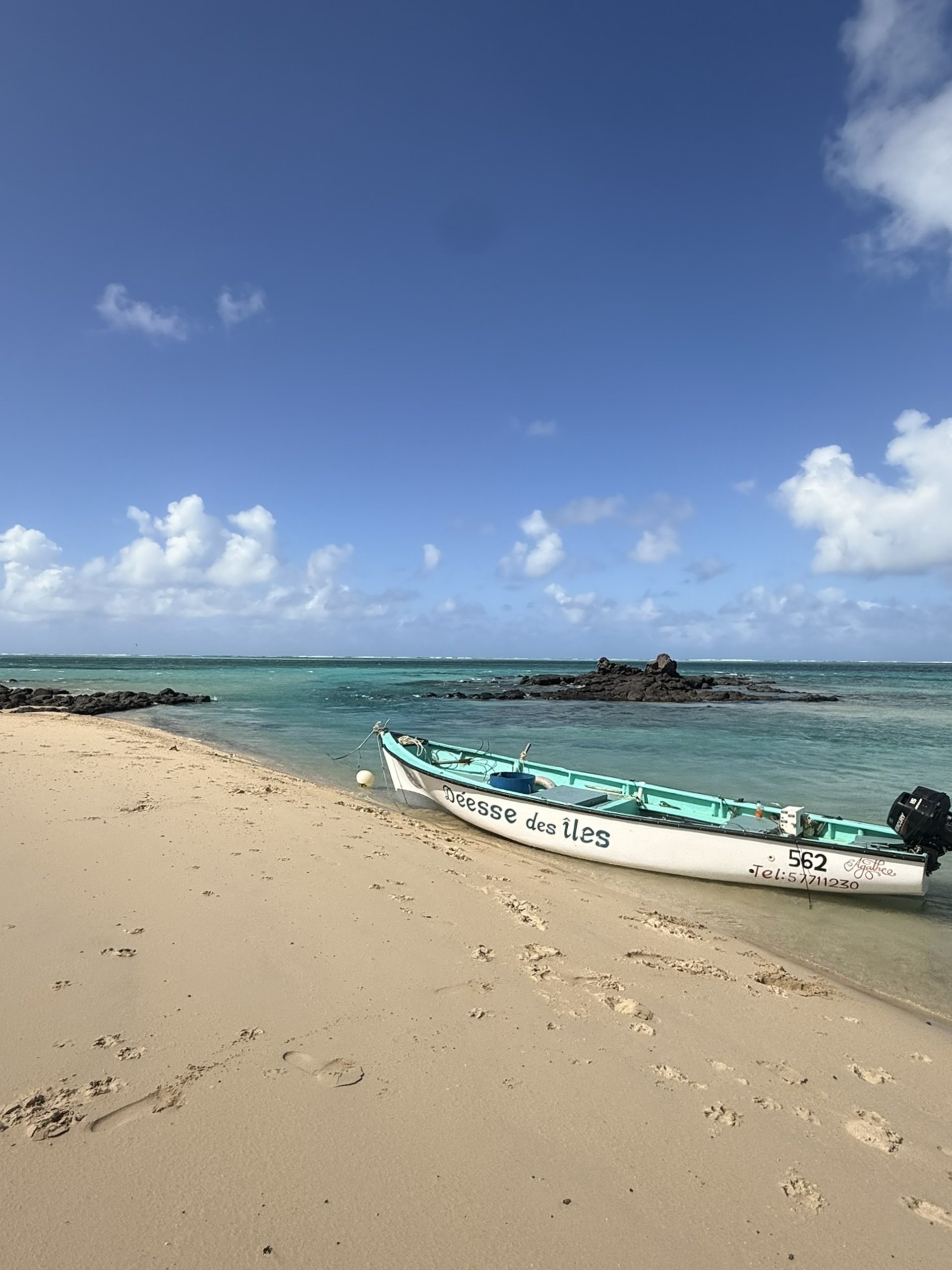
Rodrigues: Our First Four Days on the Island Nobody Expects
Rodrigues Island travel guide
DESTINATION
6/7/20265 min read
Rodrigues doesn't happen by accident.
It's not on anyone's route, it doesn't appear in the rankings of the trendiest Indian Ocean destinations, and to get here you first have to land in Mauritius and then take a second flight — a small plane with just over a hundred seats, the kind of aircraft that reminds you that you're actually going somewhere. The flight from Mauritius takes about an hour and a half. Air Mauritius serves you a snack on board — we got a chicken sandwich, a KitKat and a coffee — and before landing they hand you two customs forms to fill in: origin, accommodation, health status. It's not bureaucracy for its own sake: it's how Rodrigues protects itself, its environmental integrity and the health of its 40,000 inhabitants. An island that takes seriously the task of remaining exactly what it is.
But the moment you truly understand where you're going is when you look out the window.
A few minutes before landing, the water surrounding the island becomes visible from above and it's literally breathtaking. An absurd clarity — you can see the seabed even from altitude, the gradations of turquoise and green shifting with the depth, the coral reef drawing the boundary between the lagoon and the open ocean. No photo does this justice. You have to see it.
The Arrival: Family, Lunch, and Tom Finally Breathing
At Sir Gaëtan Duval Airport — small, one terminal, one runway, you're outside in five minutes — Tom's family was waiting for us.
Tom hadn't been back in years. They couldn't wait. What unfolded on the airport forecourt, between hugs and barely contained tears, is one of those scenes you don't forget easily — and that immediately made me understand why he had been waiting for this moment with such intensity.
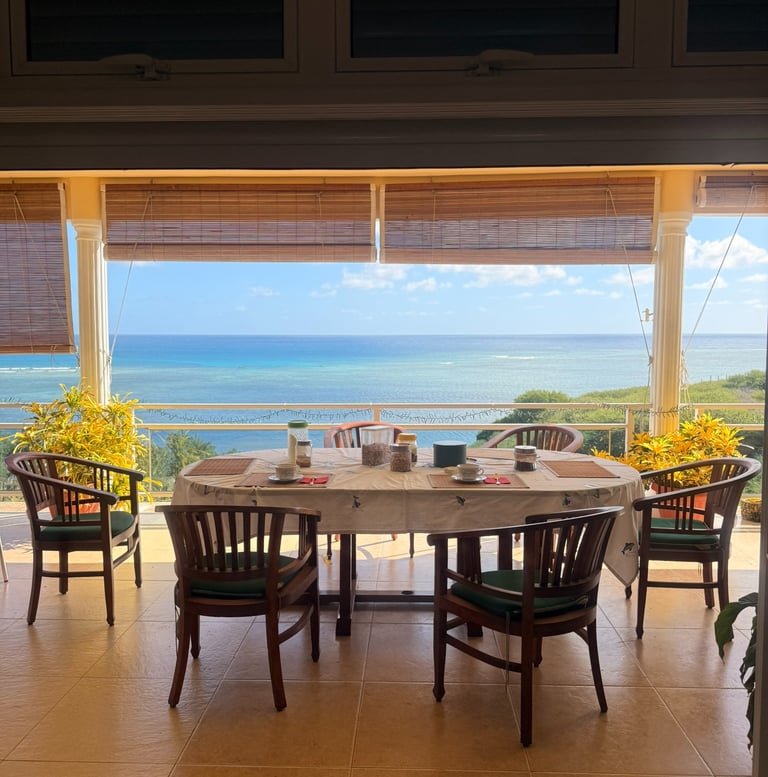
A family lunch on the terrace was waiting for us: a table full of dishes, everyone talking at once in Creole and French, genuine curiosity about our travels, laughter. The kind of welcome you don't find in four-star boutique hotels. I saw Tom laugh differently than at any other moment over the past few months — the kind of ease that only comes when you're in the right place with the right people.
The family is wonderful: always smiling, full of energy, with a spontaneous generosity that makes you want to slow down and stay.
Day 2 — Port Mathurin: The Bazaar and Tom's Childhood Places
Monday we spent in Port Mathurin, the island's capital — if you can call it that: a town of a few thousand people with narrow streets, colourful houses and a pace that feels frozen in the 1980s, in the best possible way.
We walked through the bazaar: stalls of spices, local vegetables, fabrics, everyday items. Nothing designed for tourists — it's a real market, frequented by locals doing their weekly shopping. Then the small shops in the town centre, the ones that seem suspended in time, where you can buy a little of everything and the owner is often also the cashier, the stockroom and the consultant.
The best part wasn't so much what we were seeing, but the way Tom was seeing it. Every corner had a story: that bar he used to go to as a kid, that street that led to a friend's house, that shop that was there when he was little and is still there today. Walking Port Mathurin with him was something completely different from any guided tour — it was retracing a personal geography, and I found myself watching him more than the places.
Days 3 and 4 — Mouruk: Kitesurfing and Fried Mines
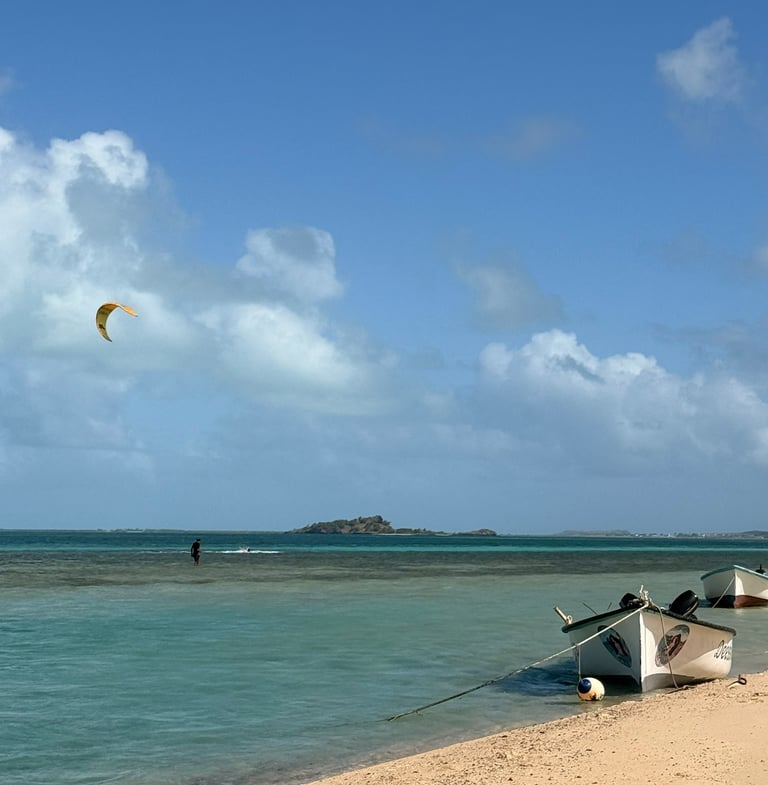
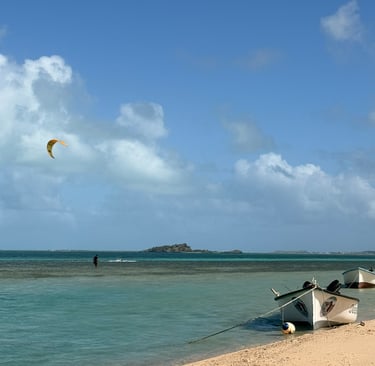
For the next two days we moved to Mouruk, on the north-east coast of the island, one of the best spots for kitesurfing thanks to the constant trade winds.
An honest disclaimer: kitesurfing looks easy in videos. It really isn't.
Watching someone who knows what they're doing is almost hypnotic — the lightness, the control, the speed. Actually trying it is a completely different story. Managing the kite, balancing the board, working with the wind without ending up underwater every thirty seconds requires a learning curve you can't improvise in an afternoon. We had fun anyway, especially during the part where falling into the Rodrigues lagoon is, objectively, one of the worst punishments imaginable.
After the session in the water we had fried mines — noodles stir-fried with vegetables, egg and your choice of protein, one of the most common and satisfying dishes in the entire Indian Ocean island cuisine. Simple, filling, cheap. Exactly what you need after hours in the water with the wind in your face.
This Morning — Tom Out at Sea with His Uncle
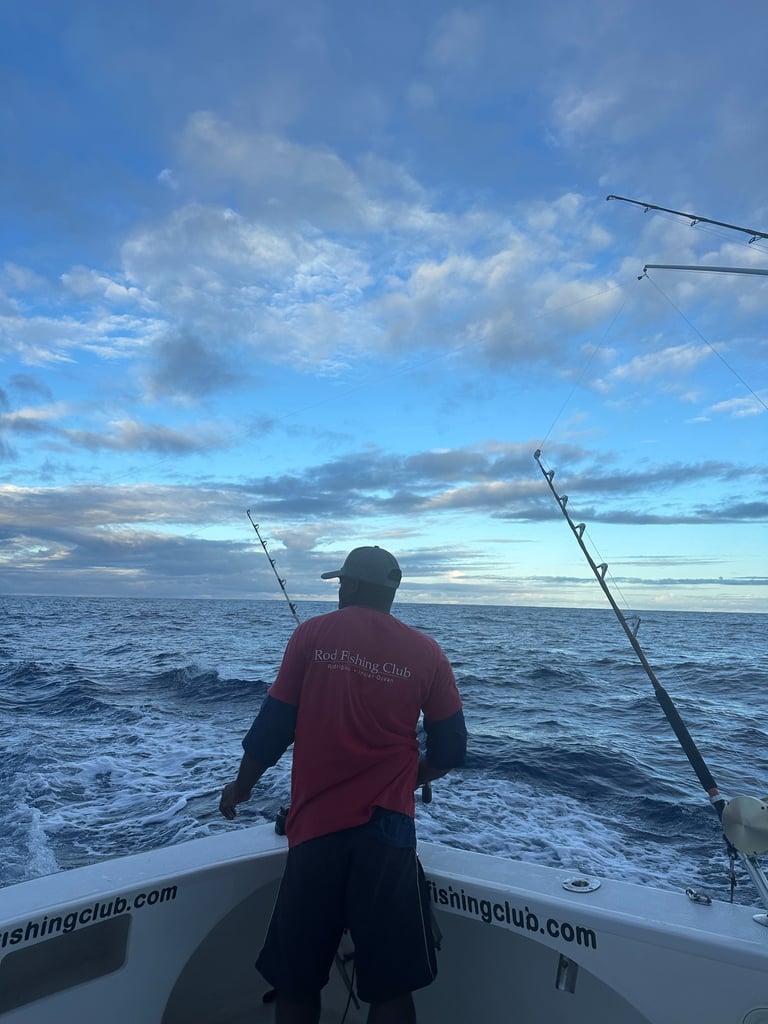
This morning Tom left for two days of deep-sea fishing with his uncle.
This isn't just any trip. His uncle runs the family business, the Rod Fishing Club, a company that organises offshore fishing tours around Rodrigues — and holds thirteen world fishing records. Thirteen. Marlin, tuna, swordfish — the waters around Rodrigues are among the best in the world for deep-sea fishing, and almost nobody knows it.
Tom grew up with these stories. Coming back here and going out to sea with his uncle was one of those things he had been looking forward to with great anticipation. This morning he was as excited as a kid.
I'm staying on land — spending time with his cousins exploring the island. I'll update when he's back
Four Days, One Impression
Rodrigues isn't a destination that hits you with immediate, spectacular beauty. It gets under your skin slowly — through Tom's family on the airport forecourt, through the Port Mathurin bazaar selling real things to real people, through the wind at Mouruk and the fried mines eaten sitting on a wall.
It's an island that doesn't need to convince you of anything. It exists, it does what it's always done, and if you're willing to slow down enough it shows you what it is.
We're here for three weeks. We've used just four days, and neither of us is ready to think about what comes next.
Practical Information — Rodrigues at a Glance
Getting there Only via Mauritius — Air Mauritius flight ~1h30. Book well in advance, seats sell out.
Customs Two forms to fill in on the flight (origin, accommodation, health). Mandatory.
Currency Mauritian Rupee (MUR). Bring cash from Mauritius — limited ATMs.
Language French and Creole. English is not widely spoken outside tourism.
Getting around Scooter or car rental from day one. Buses exist but are slow and limited.
WiFi Slow and unreliable. Download offline maps before you arrive.
Kitesurfing Mouruk, north-east coast — constant wind year-round thanks to the trade winds.
Deep-sea fishing Rod Fishing Club — 13 world records. For anyone looking for a serious offshore experience.
Best season April–November (dry season). December–March is cyclone season.
Minimum recommended 5–7 days to really feel settled on the island.