

Lanzarote Off the Beaten Path: What the Tourist Guides Don't Tell You
Lanzarote off the beaten path: Timanfaya's volcanoes, the green lagoon of Lago Verde, La Geria's vineyards in ash, and the wild beaches most tourist guides skip.
DESTINATIONLANZAROTE
5/8/20264 min read
We almost didn't go to Lanzarote.
We thought it would be dry. Windy. Maybe beautiful, but not unforgettable. Just another island in the Atlantic. We were wrong — and four days later, we were already talking about going back.
This isn't a list of things to tick off. It's the route we would follow again, and the things we wish someone had told us before we arrived. We packed all of it — every stop, every practical detail, every "don't miss this" moment — into our Complete Lanzarote Travel Guide. But here's a taste of what's inside.
1. Timanfaya isn't just a viewpoint — it's another planet
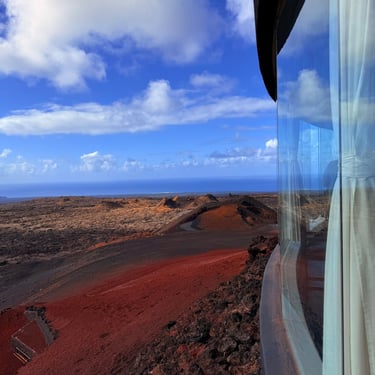
Most people know Timanfaya National Park exists. Fewer know what it actually feels like to be inside it.
The volcanic route can only be done by official bus — you're not allowed to leave it during the tour — and for 40 minutes you move between craters that still hold heat beneath the surface. Guides pour water directly into the ground and watch it turn to steam instantly. A few meters below, temperatures reach over 300°C.
Then there's Restaurante El Diablo, right inside the park, where food is grilled using the natural heat of the volcano itself. Yes, really. It's iconic, and it's genuinely worth it.
Practical note: Tickets are around €22 per person and include the bus tour. Arrive early — queues build fast in high season. Bring a jacket (the wind is relentless) and water (the sun is stronger than it looks). Plan 2–3 hours.
3. Lago Verde is the one place on the island that stops you in your tracks
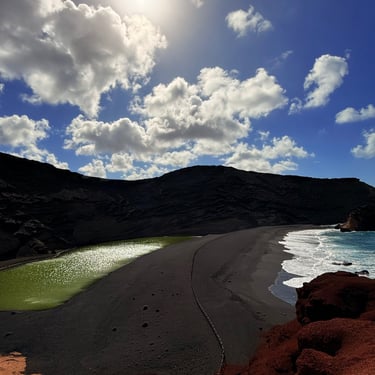
Near the small village of El Golfo on the west coast, there's a volcanic crater that opens directly onto the Atlantic. Inside it: an emerald-green lagoon.
Charco de los Clicos (also called Lago Verde) is one of those places where you arrive, look at the view, and stop talking. The intense green of the water — caused by algae reacting with volcanic minerals — against the red cliffs, the black volcanic sand, and the deep blue of the Atlantic. All in one single frame. You can't walk down to it. Access to the lagoon is restricted to protect the ecosystem. And maybe that's the point. We stayed at the viewpoint for almost half an hour.
Practical note: Free to visit. Short easy walk from the parking area. Late afternoon gives the deepest colors. Don't rush this stop.
7. Rent a car. Everything else follows from that.
We used Autoreisen at the airport — straightforward booking, smooth pickup, around €180 for the trip. Without a car, you miss La Geria, Lago Verde, Le Saline, Mirador de Famara, and most of what makes this island worth visiting.
The bus network covers the main towns. It doesn't cover Lanzarote.
Lanzarote: Common Questions
Do you need a car in Lanzarote? Yes — the bus covers the main towns but not the sights. Without a car you miss La Geria, Lago Verde and the wild beaches.
Is Timanfaya worth it? Yes — the volcanic bus route and El Diablo (food grilled by geothermal heat) are the island's highlight. Tickets ~€22.
What's the most striking spot on the island? Lago Verde (Charco de los Clicos), an emerald crater lagoon opening onto the Atlantic.
The full four-day route, in one place
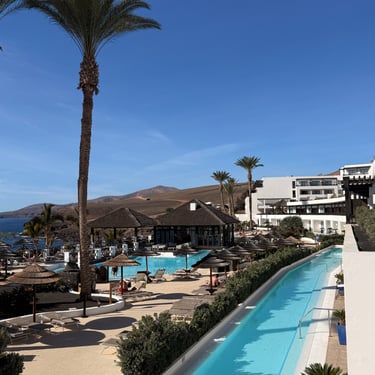
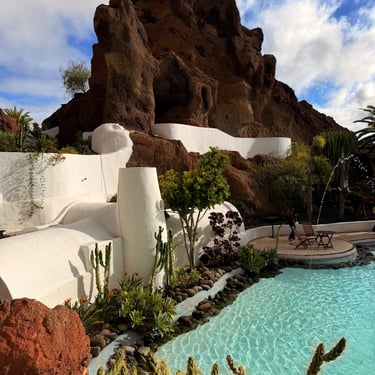
The guide covers everything above in detail — with exact locations, opening times, prices, practical tips, and the day-by-day itinerary we followed. Plus our hotel (we stayed at Secrets Lanzarote in Puerto Calero, adults-only, between lava and ocean — and the breakfast buffet alone was worth it), two extra experiences we'd recommend (camel ride at Timanfaya, quad tour through the volcanic trails), and the LagOmar Museum in Teguise for anyone who wants to understand the artistic soul of the island.
Lanzarote surprised us. This guide is our way of making sure it surprises you too — without any of the wasted time.
→ Download the Lanzarote Travel Guide
Eli & Tom Studio is a travel content brand run by an Italian-Réunionnaise couple living nomadically. Follow our journey at @elitomstudio on Instagram and Pinterest.
2. La Geria is where wine grows in volcanic ash — and it makes perfect sense
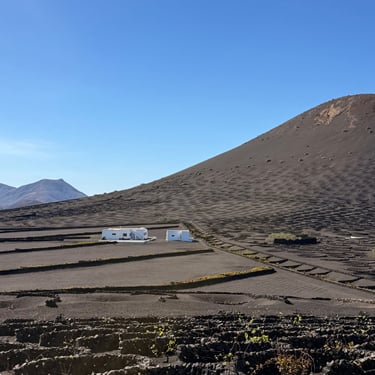
After Timanfaya, the landscape shifts. Still black, still volcanic — but dotted with green.
La Geria is Lanzarote's wine valley, and it looks like nowhere else on Earth. The vines don't grow in neat rows. They grow inside shallow craters carved into volcanic ash, each one shielded from the wind by a small semicircular stone wall. Every plant has its own hollow. It's simple and brilliant at the same time.
We drove slowly along the LZ-30, stopped without a plan more than once, and ended up at a local bodega for a tasting. The Malvasia white wine — crisp, mineral, completely different from what we were used to — is reason enough to come.
Don't miss: Bodega La Geria, El Grifo, and Rubicón for tastings (around €5–10 per person). Late afternoon light makes the contrast between the black lava and green vines extraordinary. If you feel like a short walk, the volcanic trails around Canyon de La Geria have panoramic views over the whole valley.
4. Playa de Janubio and the salt pans are right next door — and nobody mentions them
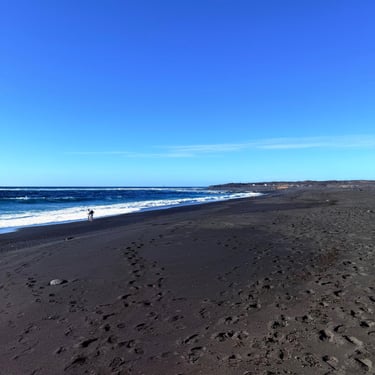
Most visitors go to Lago Verde and leave. Drive five more minutes south and you reach Playa de Janubio — a black sand beach where the Atlantic doesn't whisper. It crashes. No umbrellas, no beach clubs, no infrastructure. Just raw ocean and volcanic coastline.
Just south of that: Le Saline di Janubio, one of the most visually striking and least-visited spots on the island. White geometric salt pans reflecting the sky, harvested the same way for centuries — using nothing but light, air, and patience. Stay until the light shifts. It changes everything.
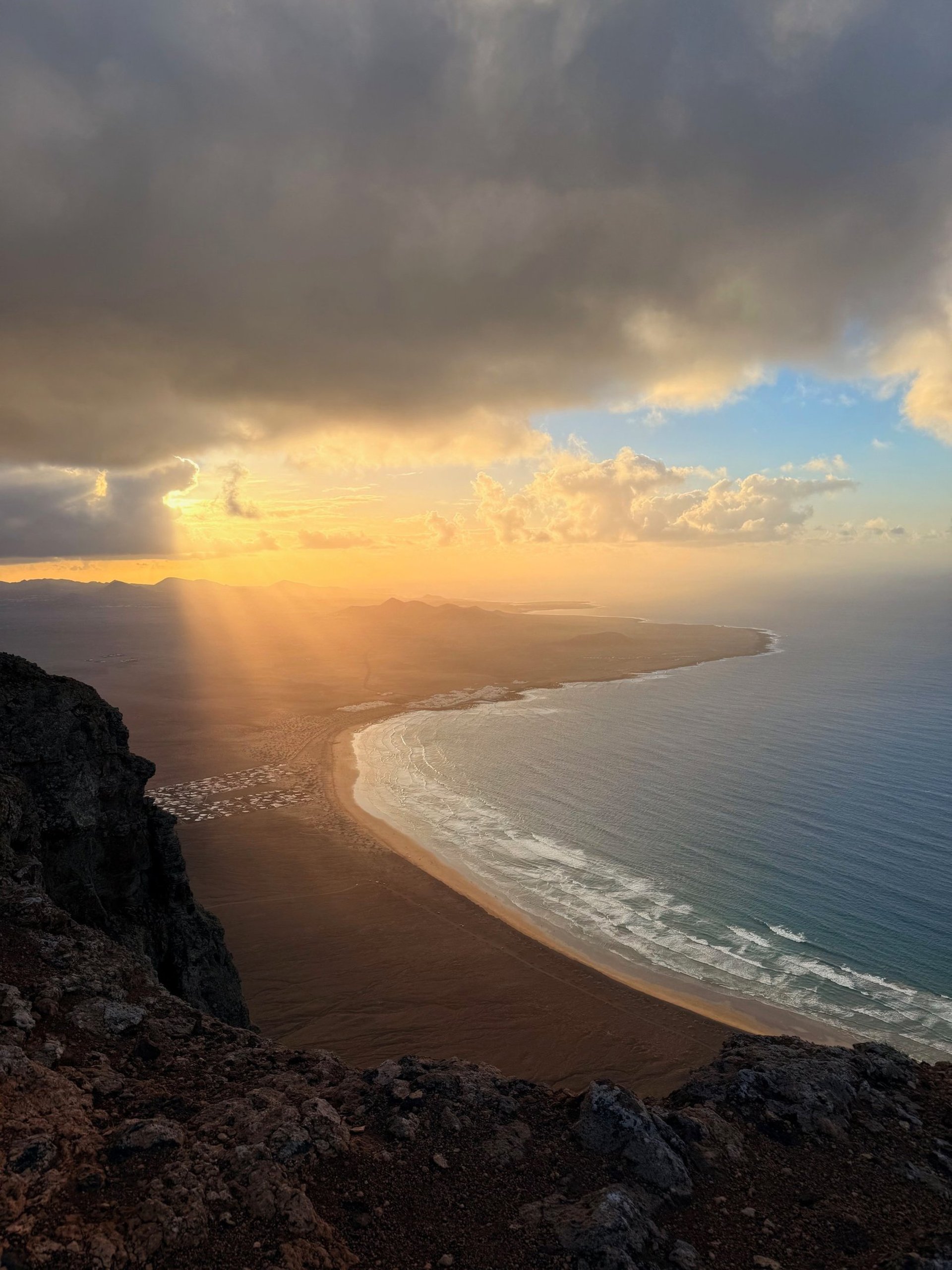
5. The best sunset on the island is at Mirador de Famara
Everyone talks about Papagayo beach. Fewer people make it to Mirador de Famara in the north, where the cliffs drop straight to the ocean and the horizon is completely uninterrupted. We stood there as the sun went down and didn't say much. Some places don't need commentary.
This is also the Lanzarote that doesn't appear in resort brochures: wild, windswept, with the kind of silence that forces you to slow down.
6. The food scene is better than you'd expect — if you know where to look
Lanzarote has a real restaurant culture, and the guide inside the ebook breaks it down. Our four picks:
El Diablo (Timanfaya) — meat cooked with geothermal heat. Iconic for a reason. Mid-range.
Aromatico (Puerto del Carmen, inside the shopping center) — our everyday spot. Simple plates, good coffee, easy evenings. Casual pricing.
La Casa Roja (Marina Rubicón) — paella by the ocean. Long lunches, salt in the air. Mid-range.
La Cascada (central Lanzarote) — bold meat cuts, open fire, no subtlety. Mid to high range.
Contact
For tips or collaborations, feel free to reach out.
collab@elitomstudio.com
© 2026. All rights reserved.
This site may contain affiliate links. If you make a purchase through one of these links, we may earn a small commission at no extra cost to you. We only recommend products and services we've personally used and trust.