La Réunion: First Impressions of an Island That Doesn't Let You Go
We didn't expect La Réunion to feel this overwhelming — in the best way. Volcanoes, lagoons, Creole markets and a pace of life that forces you to slow down. Our honest first impressions after one week on the island.
DESTINATION
6/4/20265 min read
The first thing that hits you: the scale
La Réunion is small on a map — about 2,500 square kilometres, roughly the size of a middling European city. But it doesn't feel small. It feels enormous, in the way mountains always make flat places feel small by comparison.
Within twenty minutes of leaving the airport you're already climbing. The roads curve up into hills dense with sugar cane and traveller's palm, and then suddenly you're looking down at the coast from somewhere you didn't realise you'd reached. The island's topography is relentless. There's always another layer behind the one you can see.
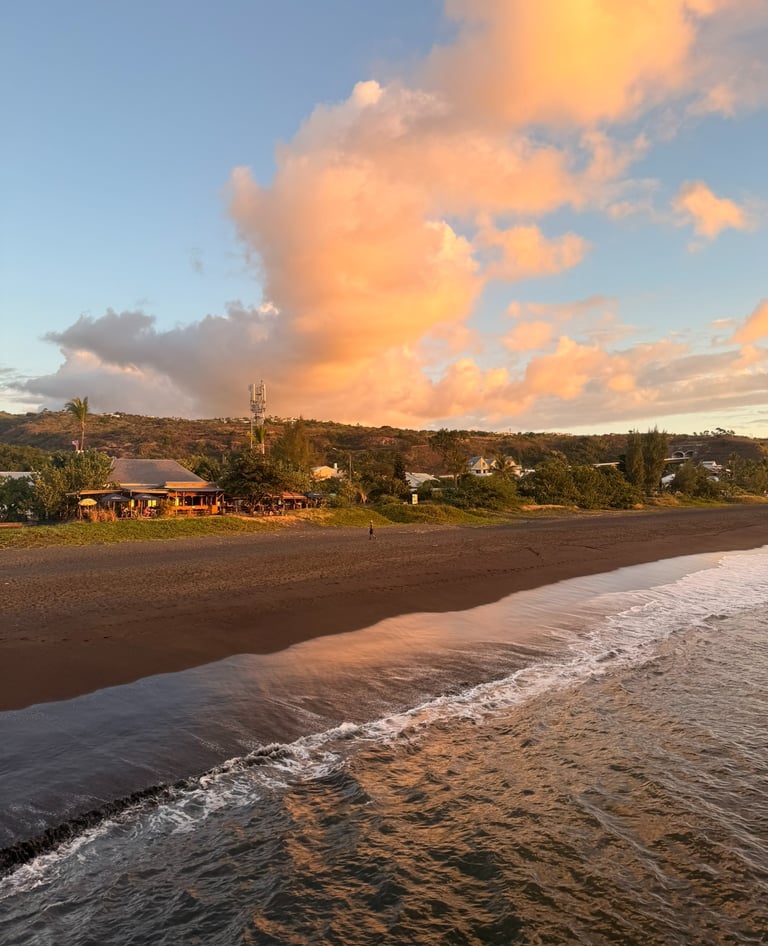
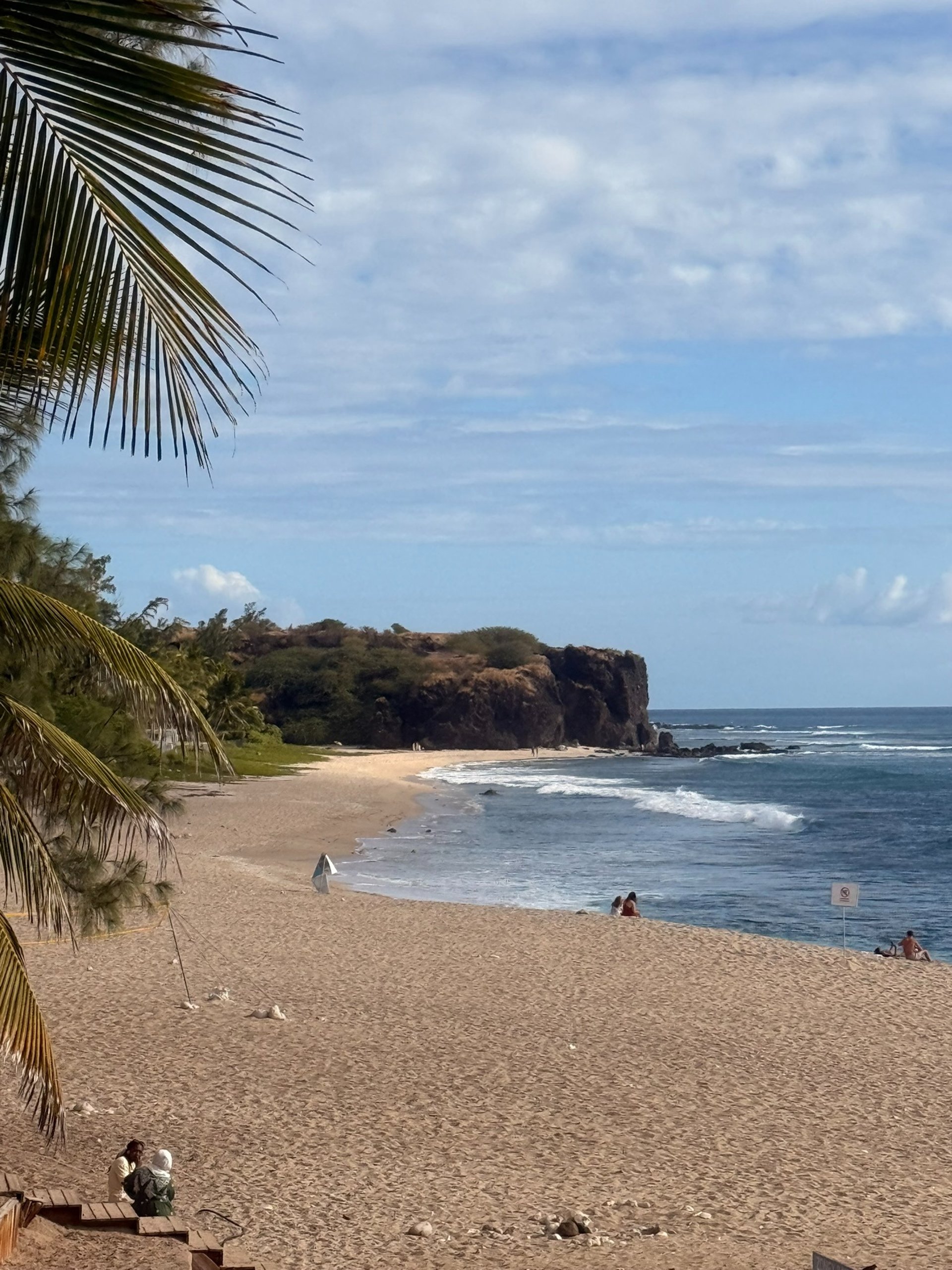
From the west coast — where we based ourselves, near Boucan Canot — you get the version most travellers know: the lagoon, the beach, the long golden light at the end of the day. It's beautiful in an uncomplicated way. Easy to fall for immediately.
But La Réunion earns its reputation inland. The three great cirques — Cilaos, Mafate, Salazie — are ancient calderas that collapsed inward millions of years ago and then filled with cloud forest, villages, and a quality of silence that feels almost aggressive after a while. We drove up to Cilaos on a road with more bends than we could count and arrived somewhere that felt entirely disconnected from the coast we'd left an hour before.
Two islands in one. That's the honest description.
We knew almost nothing about La Réunion before we booked the flights.
Well — that's not entirely true. Tom knew it. He grew up one island away, and the way he talked about La Réunion was the way people talk about a place they take for granted because it's always been there. Dramatic. Volcanic. A bit intense. Worth it.
I had no frame of reference. I'd seen photos of turquoise lagoons and heard the words Piton de la Fournaise enough times to know there was an active volcano involved. That was more or less it.
We landed in Saint-Denis at the tail end of May, two backpacks between us and no real plan beyond the first few nights. What followed was one of the most unexpectedly full weeks of travel either of us has had in a long time.
This is what we found.
The west coast: where you'll probably start, and where you might stay
Boucan Canot became our anchor point without us deciding it would.
The beach is protected by a natural reef, which keeps the water calm and the colour a specific shade of turquoise that photographs well but actually looks better in person. The sand is white and fine. The surrounding hills drop almost straight into the shoreline. In the early morning, before the weekend crowd arrives, it's the kind of place that makes you think you've made a genuinely good decision.
We went back more than once at golden hour, which sounds like a cliché until you're actually standing there watching the light change across the Indian Ocean and realising you've stopped talking. Some places earn their reputation.
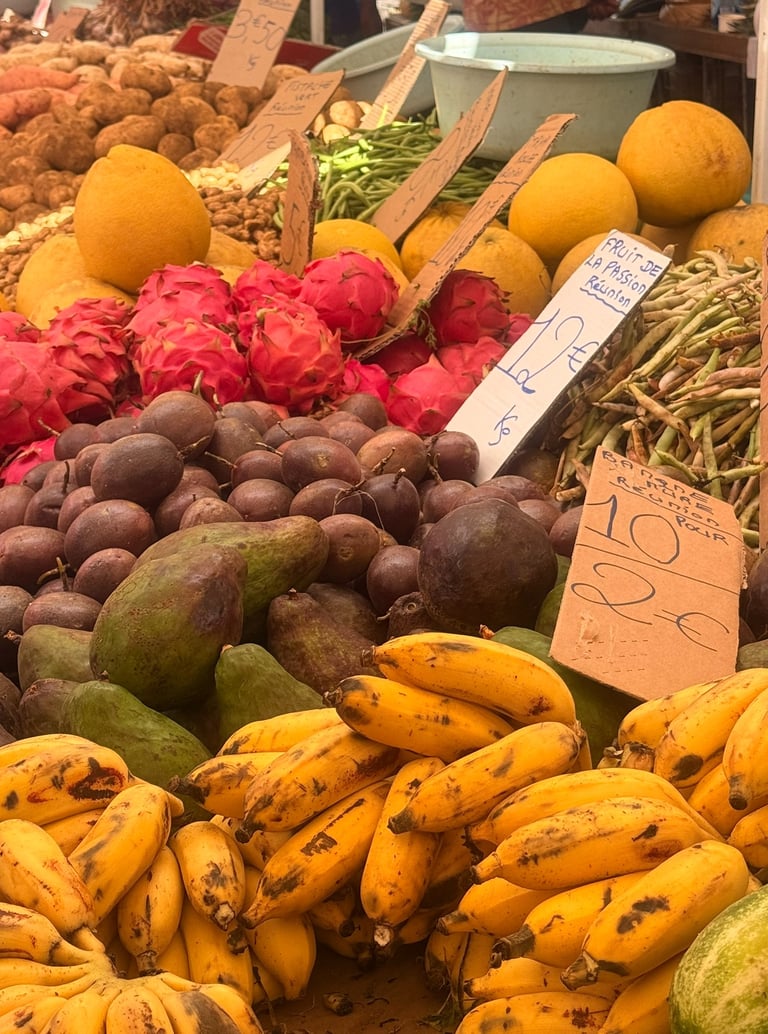
Saint-Paul is fifteen minutes up the coast and entirely different in character. Less polished, more lived-in. The beach stretches for kilometres without much in the way of facilities, which means it mostly belongs to locals on weekday mornings. On Saturdays there's a market along the waterfront — vanilla pods, local rum, Creole street food, handmade things — that's worth setting an alarm for.
Saint-Gilles-les-Bains sits between the two and has the most tourist infrastructure: restaurants, a marina, dive shops. It's pleasant without being memorable. We used it as a base for logistics and left the lingering to Boucan Canot and Saint-Paul.
The food: better than anyone told us
Creole cuisine caught us off guard.
We were expecting rice and beans. We got rougail saucisse, which is sausage braised in a tomato and ginger sauce until it becomes something better than the sum of its parts. We got cari poulet served with rougail mangue — a sharp green mango condiment that cuts through everything — and grains (a catch-all term for pulses, served alongside almost every meal).
The spicing is warm rather than hot. Turmeric, ginger, garlic, thyme — layered in a way that's closer to Mauritian or Malagasy cooking than to anything French. Which makes sense, historically: La Réunion's food is the sum of its migrations, and those came from all directions.
We ate most of our best meals at snacks — the local term for simple lunch spots, usually run by one person, often out of a converted house or a roadside window. Budget somewhere between €8 and €12 for a full plate. Don't expect a menu in English. Point if you have to.
One thing nobody mentions: the roads
Driving in La Réunion requires full attention.
The main road around the island (the RN1 along the west coast) is straightforward enough, but once you head inland the routes become narrow, winding, occasionally one-lane affairs with sheer drops on one side and rock face on the other. The road to Cilaos has something like 400 hairpin bends. The road to the Piton de la Fournaise parking area is paved but steep in a way that makes you quietly grateful for functioning brakes.
This isn't a complaint — it's context. Budget more time than you think you need to get anywhere. The drives are part of the experience. Some of the best moments of the week happened through the windscreen.
The shark situation: real, managed, not a reason to stay on the beach
La Réunion had a period of serious shark incidents several years ago, and the island responded with infrastructure. There's a QR code system at every beach showing real-time alert status — green means cleared for swimming in the lagoon, orange means caution, red means out. The protected lagoon beaches (Boucan Canot, L'Ermitage, Saint-Gilles) are netted and monitored. We swam every day.
Outside the lagoon, the rules are different and the signage makes that clear. This isn't a problem if you pay attention, which you should do at any unfamiliar beach anywhere in the world.
Check the QR code. Swim in the lagoon. The Indian Ocean is worth it.
First impressions, summed up honestly
La Réunion is not a relaxing island in the passive sense. It demands something from you — attention, energy, a willingness to drive into the mountains without a clear plan and see what happens.
In return it gives you scenery that genuinely doesn't look real, food that earns its place at every meal, and the particular satisfaction of a place that hasn't yet smoothed itself out for mass tourism.
We arrived expecting to spend a few weeks and move on. A week in, neither of us was thinking about moving on.
That's probably the most honest thing to say about La Réunion.
Practical notes (quick version)
Getting there: Direct flights from Paris (Air Austral, French Bee, Air France). From other European cities: connect via Paris or Mauritius.
Currency: Euro — it's a French overseas territory.
Language: French. Creole is widely spoken locally. English is limited outside tourist areas; a few words of French go a long way.
Getting around: Rent a car. Public transport exists but is slow and limited, especially inland.
Best base: West coast for beaches and access. Saint-Gilles or Saint-Paul if you want local character. Cilaos if you're there for hiking.
When to go: May–November is the dry season on the west coast. December–April is cyclone season — not impossible but unpredictable.
Budget: Mid-range. Eating at snacks keeps costs low; restaurant prices are comparable to mainland France.